World Engineering Day: Intelligent Agents and The Future of Innovation
By Rosalind Mukami, 2nd Year, Journalism & Mass Communication
Was God the First Engineer?
Think about it. The universe—perfectly balanced, intricately designed, and built to sustain life. The skies stretched like a vast dome, the oceans carved to perfection, the mountains anchored deep beneath the earth. If engineering is about designing, creating, and problem-solving, then doesn’t the universe itself stand as the greatest feat of engineering?
Fast forward to today, and engineers are still playing god-like roles—building cities, harnessing energy, creating artificial intelligence, and even attempting to reverse climate change. On March 4, the world pauses to celebrate these modern-day architects of progress on World Engineering Day for Sustainable Development.
A Brief History of World Engineering Day
World Engineering Day (WED) was officially proclaimed by UNESCO in 2019 as a global observance to recognize the role of engineers in shaping society. It’s a day dedicated to the dreamers, the doers, the designers—those who tackle some of the world’s toughest challenges, from clean water and renewable energy to advanced medical technology and artificial intelligence.
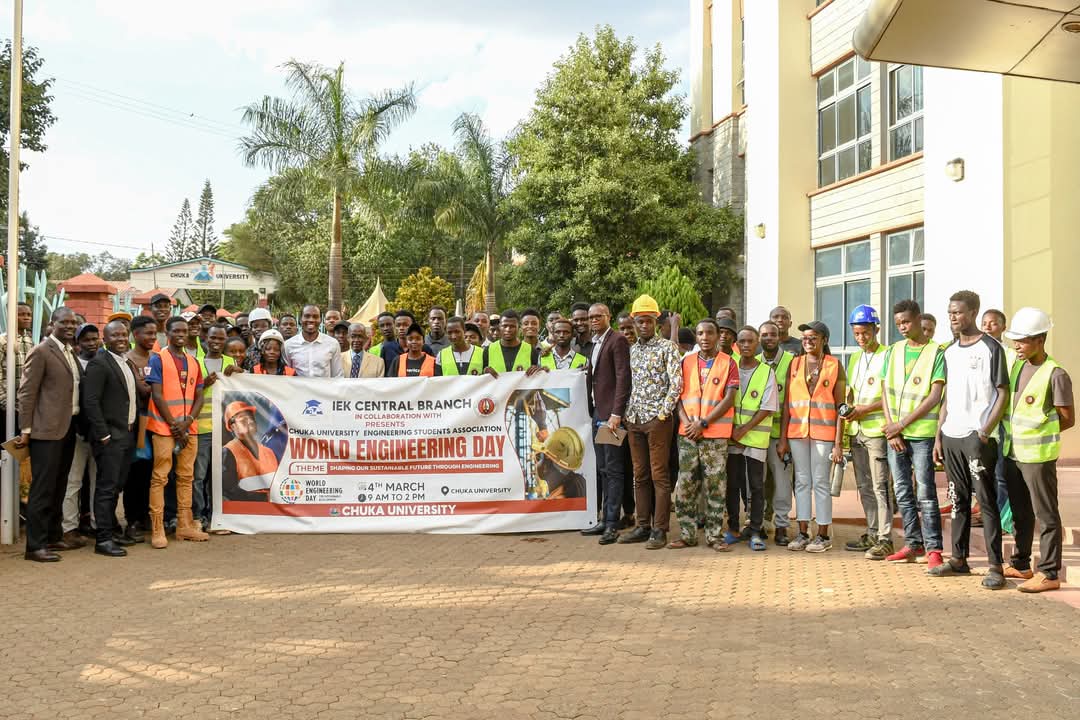
The theme for this year’s celebration? “Shaping our Sustainable Future through Engineering.” And at Chuka University, the day was marked with an engineering walk and a thought-provoking public lecture by Eng. Prof. Odhiambo Marcel Ohanga, the founding Dean of the Faculty of Engineering.Engineering the Future: The Power of Intelligent Agents
“What if machines could think, learn, and solve problems like humans? What if technology was no longer just a tool, but a partner in innovation?”
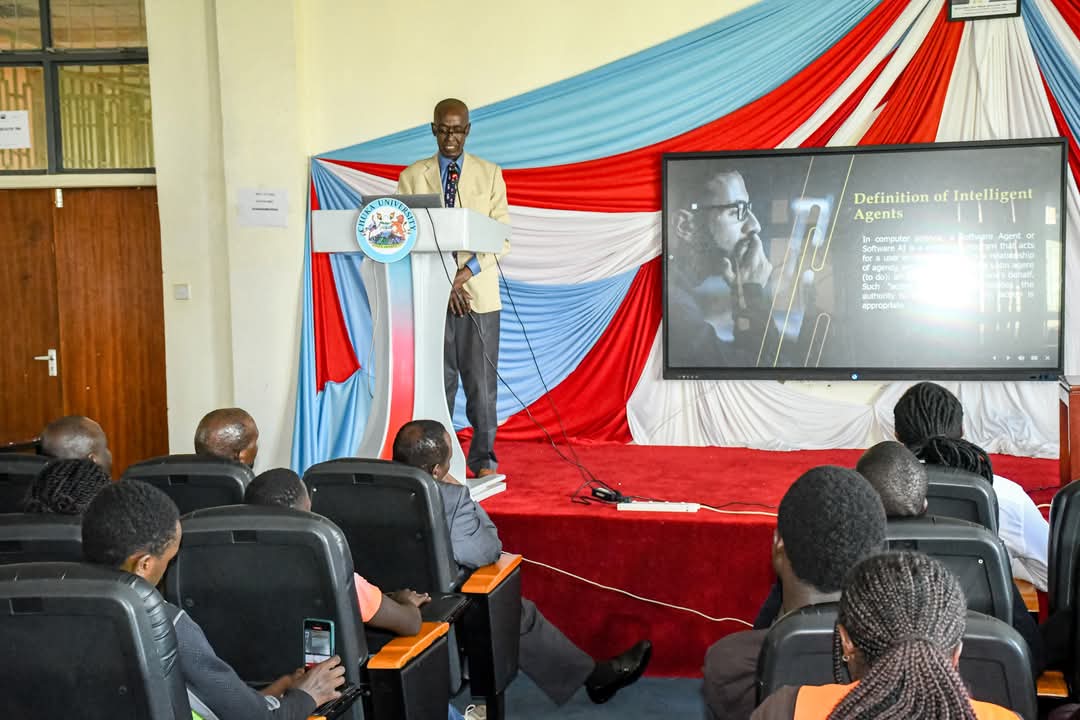
These were the questions that Prof. Ohanga posed to a packed lecture hall during his public lecture on Intelligent Agents (IA).
So, what exactly is an Intelligent Agent?
“It’s a software entity that can sense its environment, process information, and act autonomously to achieve specific goals,” explained the professor. Simply put, it’s AI with a brain of its own.
From self-driving cars to AI-driven medical diagnostics, stock market prediction algorithms to smart home automation, Intelligent Agents are revolutionizing the way humans interact with technology.
But with great power comes great responsibility.
“While Intelligent Agents promise efficiency, precision, and automation, they also raise serious ethical, legal, and technological concerns,” Prof. Ohanga warned. Who takes responsibility when an AI-driven system makes an error? What happens when machines replace human jobs?
The discussion was electrifying—students scribbled notes, hands shot up with questions, and debates flared over the possibilities and dangers of AI. This wasn’t just an academic discussion; this was the future knocking on the door.The Vice-Chancellor’s Call to Action
The lecture was officially opened by Chuka University Vice-Chancellor, Prof. Henry Mutembei, who emphasized the transformative role of emerging technologies in research and innovation.
“Engineering is no longer just about roads and bridges—it’s about designing the future,” he stated.
He commended Prof. Ohanga for pioneering Chuka University’s first internal public lecture and encouraged other scholars to engage in similar knowledge-sharing forums.
“If we want to lead in research and innovation, we must create spaces where ideas can be debated and refined,” he added.
Walking for a Cause: The Engineering Walk
While the lecture stimulated minds, the Engineering Walk was all about action.
At 9:00 AM, 150 engineering students gathered at Pavilion Grounds, wearing engineering attire and reflective vests. They marched through Mungoni, Chuka Town, and neighboring centers, engaging locals and raising awareness about the role of engineers in society.
“People don’t always see the work engineers do, but today, they did,” said Masika Emmanuel, Faculty of Engineering Student Representative.
From renewable energy solutions to biomedical advancements, engineering is the backbone of civilization. This walk was a symbol of unity, a declaration of purpose, and a reminder that engineers are the architects of a sustainable future.
“Engineering drives progress, and this year’s celebration highlights its crucial role in improving lives worldwide,” added Samuel Tsuma, a second-year engineering student.
And then, of course, there was Isaac Nyanyuki, another student, who summed up his experience in the most honest way possible:
“I’ve learned a lot today. I feel inspired… and I also got free lunch!”
Engineering: More Than Just Machines
Beyond the day’s celebrations, one thing was clear—engineering isn’t just about machines and numbers. It’s about people, innovation, and the pursuit of a better world.
Think about it:
- Infrastructure – Roads, bridges, and buildings that connect the world.
- Technology – AI, automation, and Intelligent Agents reshaping industries.
- Energy – Sustainable power sources driving the future.
- Medicine – Biomedical engineering saving lives.
The revolutionizing power of Intelligent Agents in engineering is only getting started. From smart cities to automation, remote healthcare to sustainable energy, technology is rewriting the rules of what’s possible.
“Engineers and researchers must embrace these advancements,” said Prof. Ohanga. “Only then can we develop smarter solutions for the world’s biggest challenges.”
With minds buzzing with ideas and a newfound appreciation for their field, students left the event not just as learners but as future pioneers.
The message was simple: The future belongs to those bold enough to engineer it.